
VALVE PASSING INSPECTION
- Ultrasound valve inspection is a predictive maintenance technique used to identify internal leakage, turbulence, cavitation, flow abnormalities, and valve deterioration while the system remains in operation.
- Using high-frequency ultrasonic sound analysis, industries can assess valve condition without dismantling equipment or interrupting production.
Valve Inspection using Ultrasound inspection will assist Maintenance teams to identify & confirm faulty valves before removing them from service for physical inspection & repair works.

Why Valve Inspection is Important
Valves are critical components used to:
- Control flow
- Isolate systems
- Regulate pressure
- Maintain process stability
Faulty valves can cause:
- Energy losses
- Process inefficiency
- Pressure instability
- Safety hazards
- Equipment damage
- Increased operating costs
- Many valve failures are internal and cannot be detected visually.
What is Ultrasound Inspection?
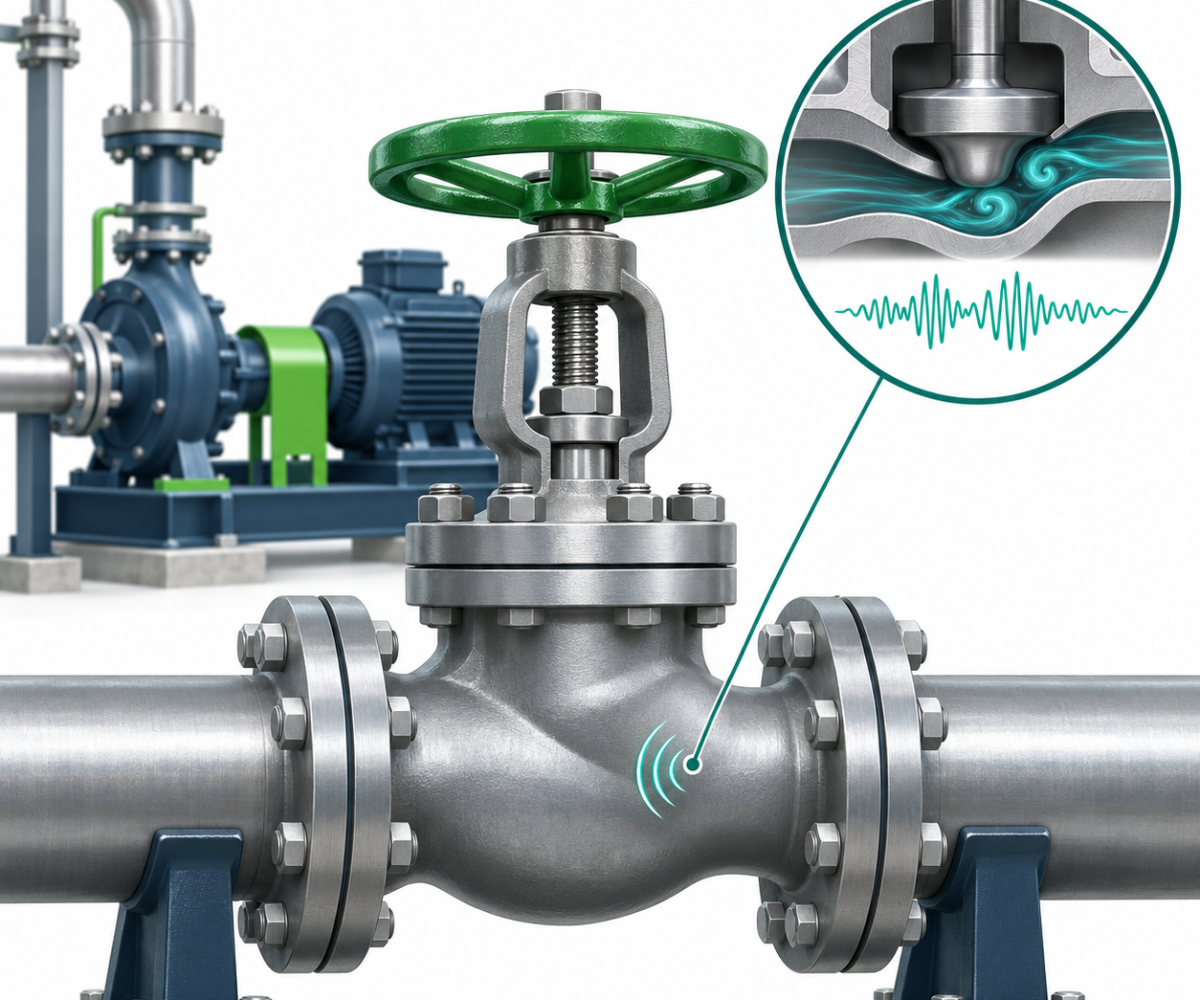
Ultrasound inspection uses sound frequencies above human hearing range (typically above 20 kHz).
When fluid or gas passes through:
- Damaged valve seats,
- Partially closed passages,
- Cracks,
- Or leakage paths,
It creates turbulence that generates ultrasonic sound waves.
Ultrasound instruments detect and analyze these signals to determine valve condition.

How Ultrasound Detects Valve Problems
Working Principle
A healthy closed valve should block flow completely.
If internal leakage occurs:
- Fluid passes through damaged sealing surfaces.
- High-velocity turbulence develops at down stream.
- Ultrasonic sound is generated.
Ultrasound instruments measure:
- Signal intensity
- Turbulence characteristics
- Sound pattern variations
- This allows technicians to identify abnormal conditions accurately.
Types of Valve Problems Detected
1. Internal Valve Leakage (Valve Passing)
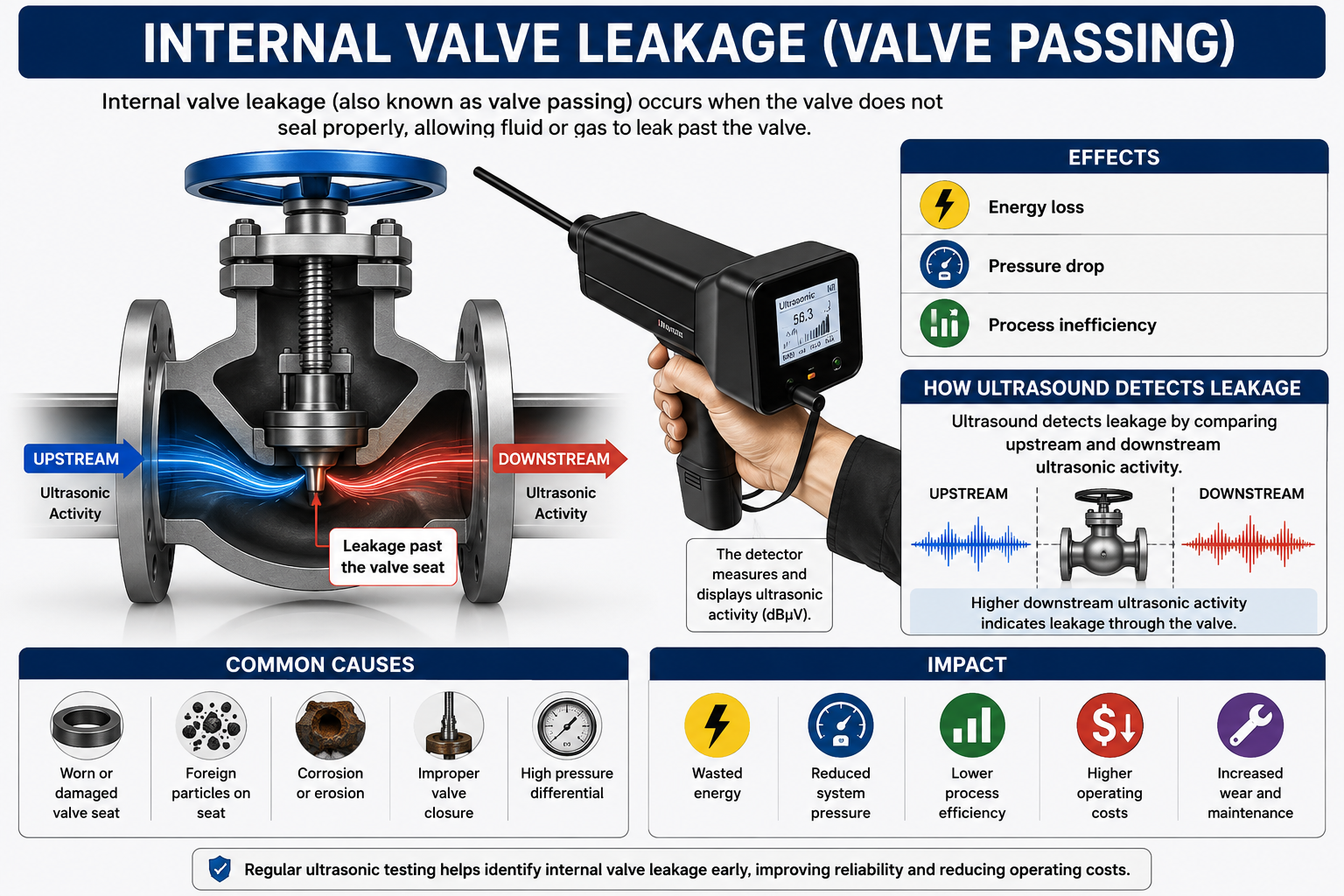
One of the most common applications.
Causes:
- Worn valve seats
- Corrosion
- Erosion
- Improper sealing
- Mechanical damage
Effects:
- Energy loss
- Pressure drop
- Process inefficiency
- Ultrasound detects leakage by comparing upstream and downstream ultrasonic activity.

2. Cavitation
Cavitation occurs when vapor bubbles form and collapse due to pressure changes.
Ultrasound Detects:
- Bubble implosion noise
- High-frequency crackling sound
Effects:
- Severe valve erosion
- Vibration
- Noise
- Reduced valve life
3. Turbulence & Flow Restriction
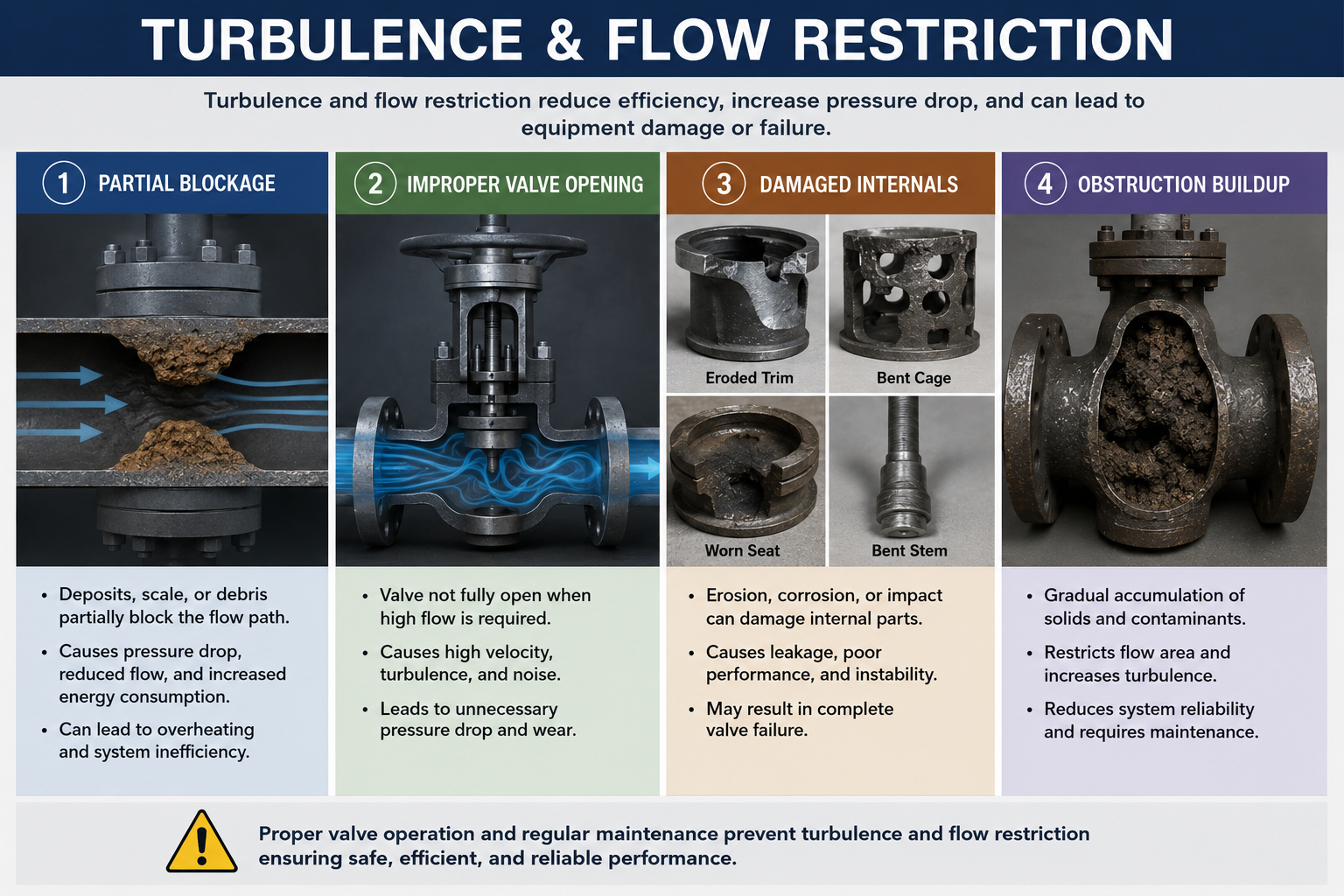
Flow disturbances create abnormal ultrasonic signatures.
Causes:
- Partial blockage
- Improper valve opening
- Damaged internals
- Obstruction buildup
4. Valve Seat Damage
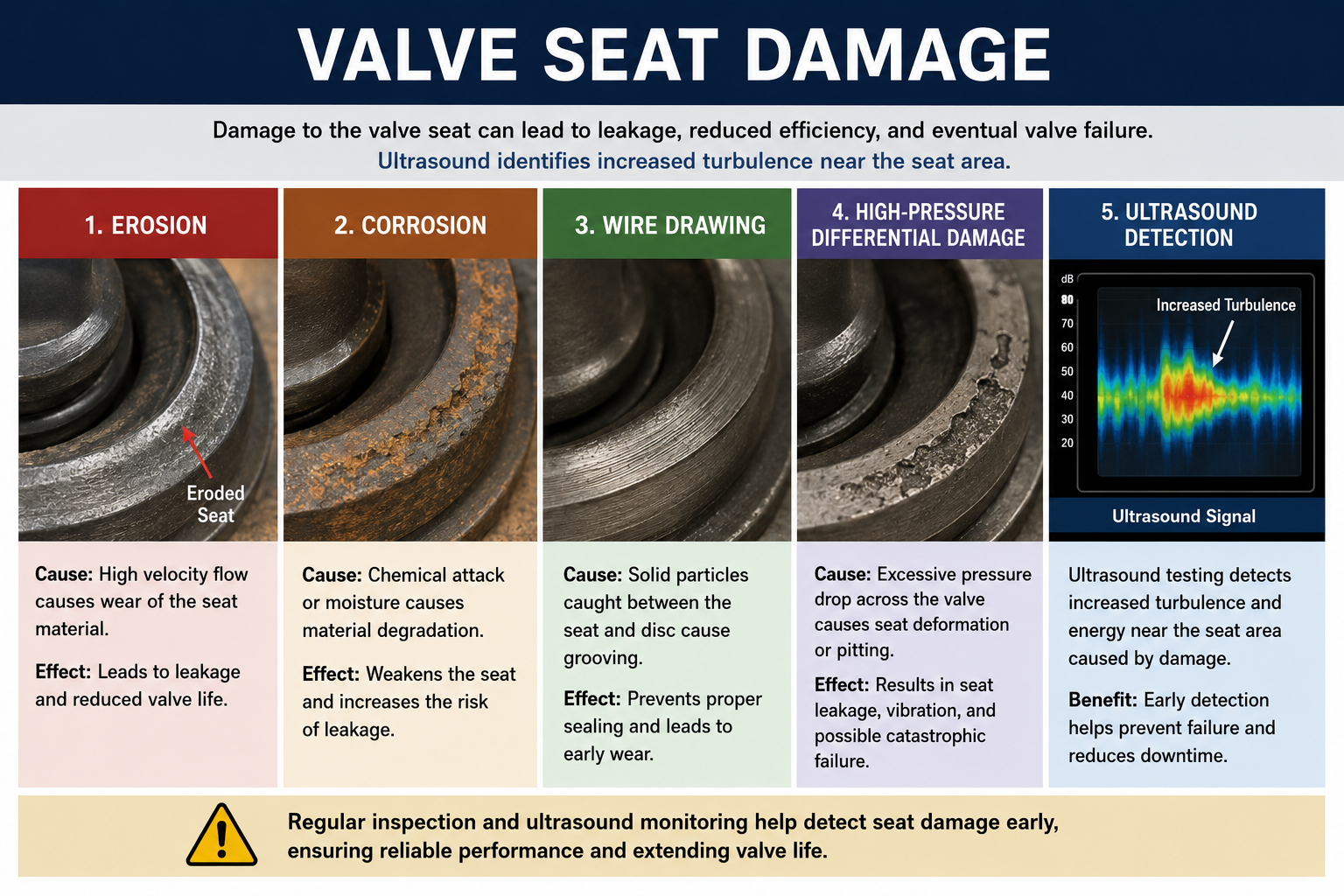
Seat deterioration allows leakage through closed valves.
Common Causes:
- Erosion
- Corrosion
- Wire drawing
- High-pressure differential damage
- Ultrasound identifies increased turbulence near the seat area.

5. Control Valve Instability
Ultrasound can detect:
- Chattering
- Flow instability
- Excessive turbulence
- Mechanical vibration
Types of Valves Commonly Inspected
Ultrasound inspection is suitable for:
- Gate valves
- Globe valves
- Ball valves
- Butterfly valves
- Check valves
- Control valves
- Pressure reducing valves (PRVs)
- Safety valves
Why Ultrasound is Preferred for Valve Inspection
Compared to traditional methods:
- Faster inspection
- Higher sensitivity
- Inspection of valve while in service
- Minimal operational interruption
- Excellent for hidden/internal faults
Advantages of Ultrasound Valve Inspection
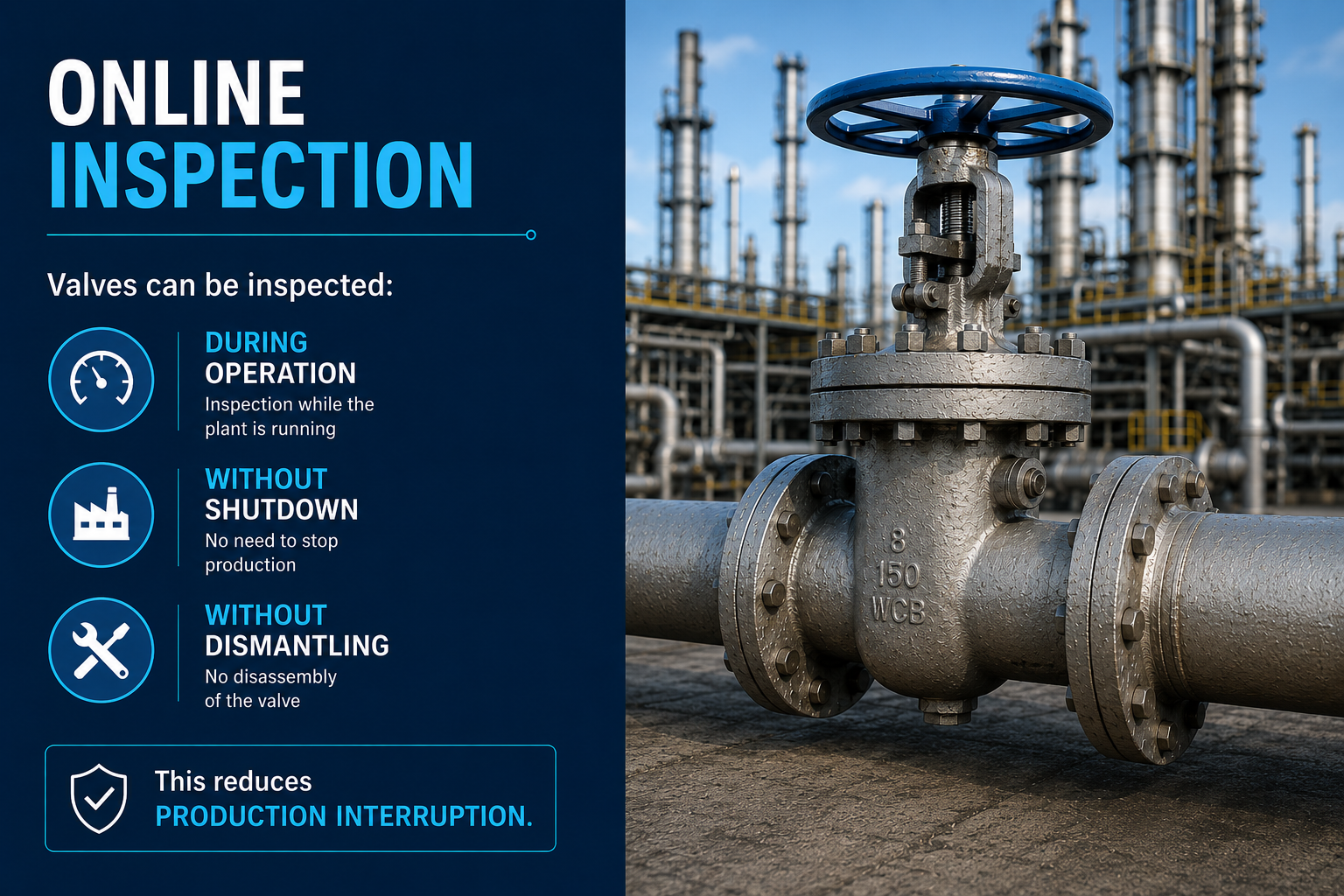
1. Online Inspection
Valves can be inspected:
- During operation
- Without shutdown
- Without dismantling
- This reduces production interruption.
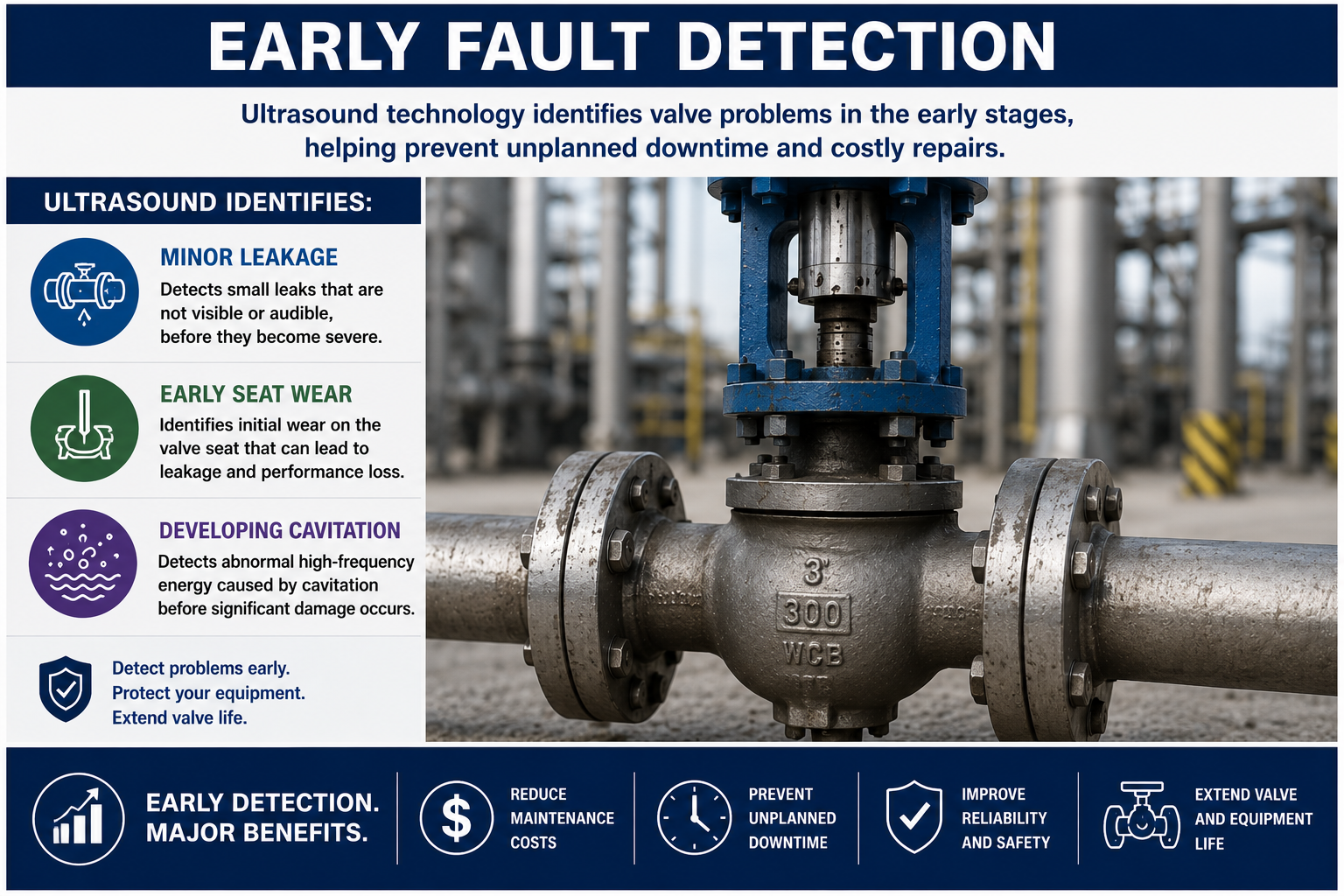
2. Early Fault Detection
Ultrasound identifies:
- Minor leakage
- Early seat wear
- Developing cavitation
- before major failure occurs.

3. Reduced Energy Losses
Leaking steam, gas, or compressed air valves waste energy continuously.
Early detection reduces:
- Steam losses
- Compressor load
- Fuel consumption

4. Improved Reliability
Routine inspection helps:
- Prevent sudden valve failure
- Improve system stability
- Reduce emergency maintenance
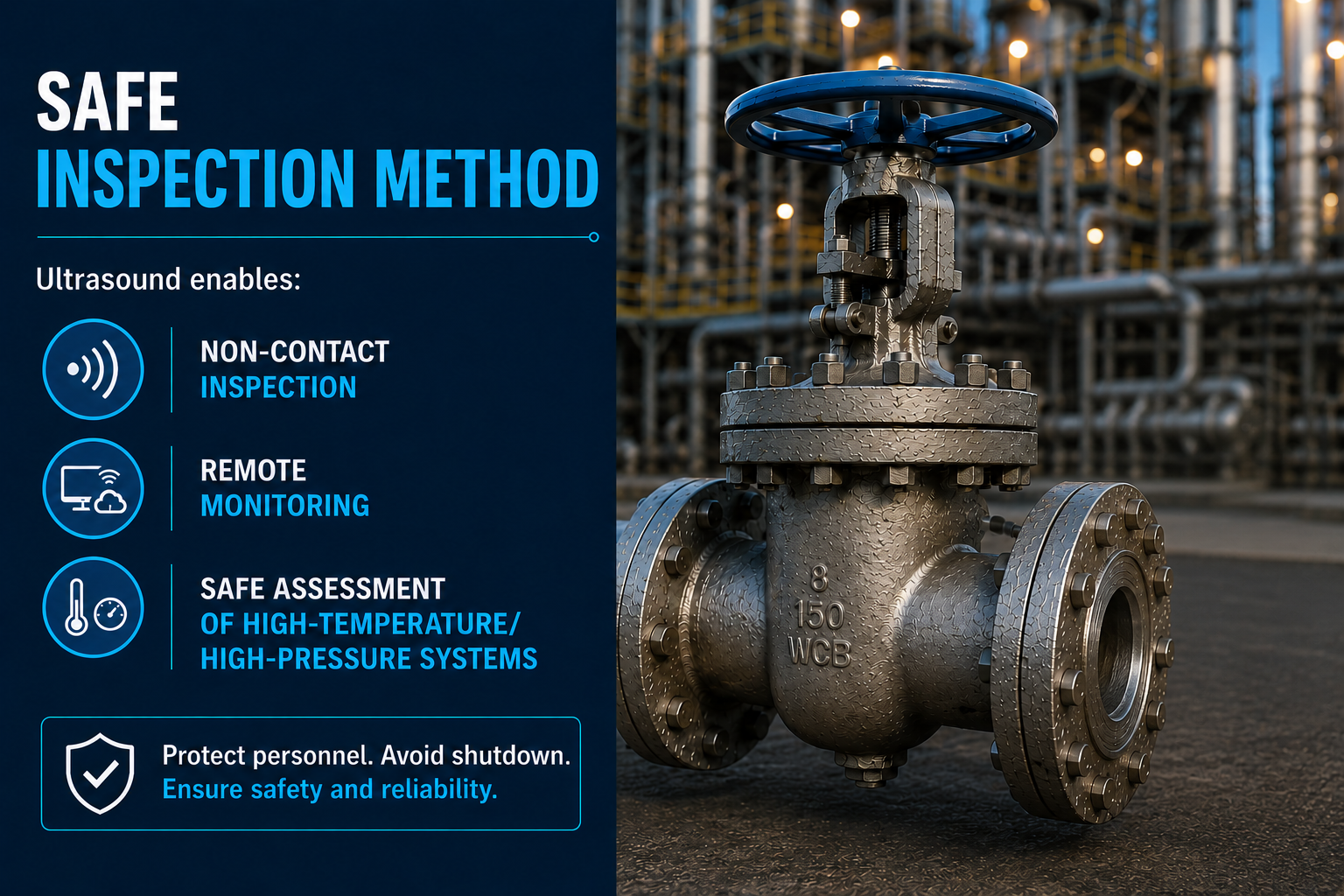
5. Safe Inspection Method
Ultrasound enables:
- Non-contact inspection
- Remote monitoring
- Safe assessment of high-temperature/high-pressure systems
Typical Ultrasound Indicators
Conclusion
- Faster inspection
- Higher sensitivity
- Online monitoring capability
- Minimal operational interruption
- Excellent for hidden/internal faults
