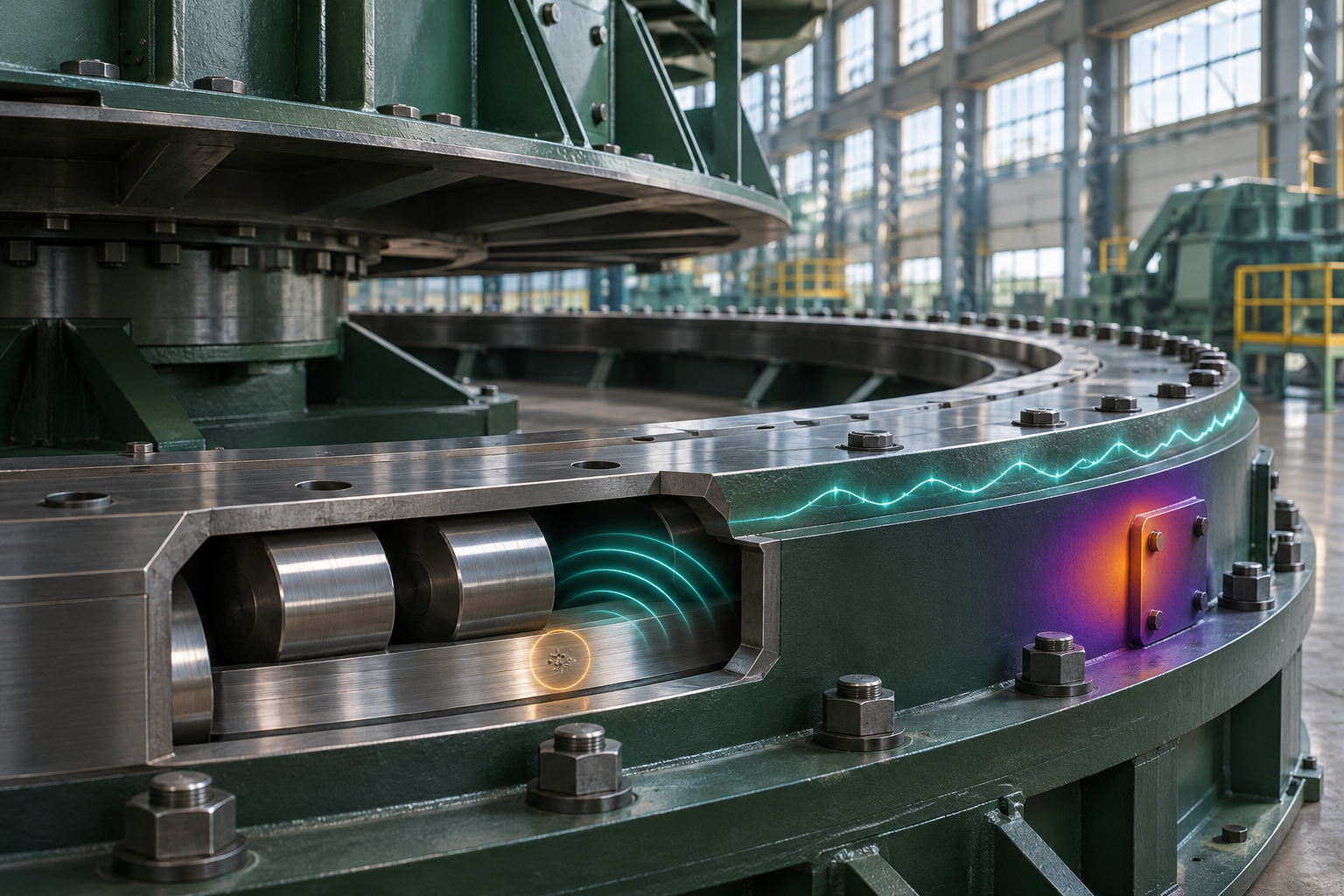
SLOW SPEED BEARING ANALYSIS
What is Slow Speed Bearing Analysis?
Speed Bearing Analysis is the process of monitoring and diagnosing the health condition of bearings operating at low rotational speeds, typically:
- Below 100 RPM
- ExtreSlowmely low-speed applications below 1 RPM
- Oscillating or intermittent rotating equipment
The objective is to detect:
- Surface defects
- Lubrication problems
- Friction abnormalities
- Mechanical looseness
- Load-related damage
- Early fatigue failure
Challenges in Monitoring Slow Speed Bearings
Low-speed bearings generate:
- Very low vibration energy
- Weak defect frequencies
- Minimal impact signals
This makes fault detection difficult using conventional vibration methods alone.
In many slow-speed applications:
- Defects develop gradually
- Failures remain hidden
- Damage becomes severe before detection
Therefore, advanced diagnostic techniques such as ultrasound become highly valuable.
Common Applications
Slow speed bearing monitoring is critical for:
- Conveyor systems
- Rolling mills
- Crushers
- Kilns
- Cooling tower fans
- Bucket elevators
- Rotary equipment
- Railway wheel bearings
- Heavy process machinery
- Paper mills
Common Bearing Problems in Slow-Speed Equipment
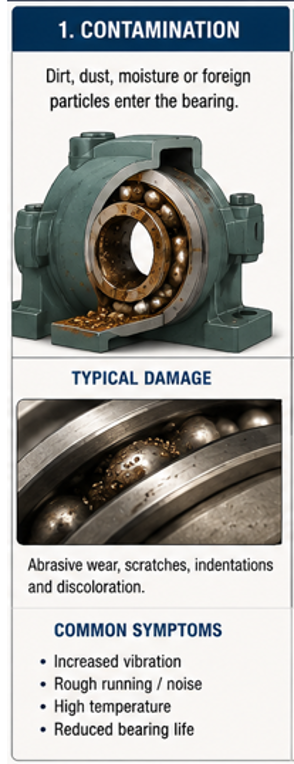
Ingress of:
- Dust
- Moisture
- Metal particles
- accelerates bearing deterioration.
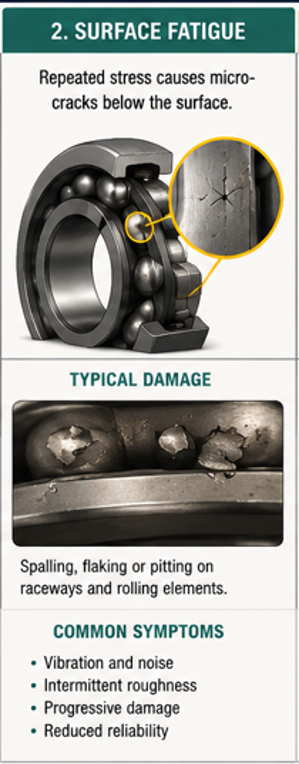
Repeated heavy loading creates:
- Pitting
- Spalling
- Micro-cracks

Slow-speed systems often experience:
- Structural looseness
- Shaft misalignment
- Load imbalance

Occurs due to:
- Vibration while stationary
- Oscillating movement
- Insufficient lubrication
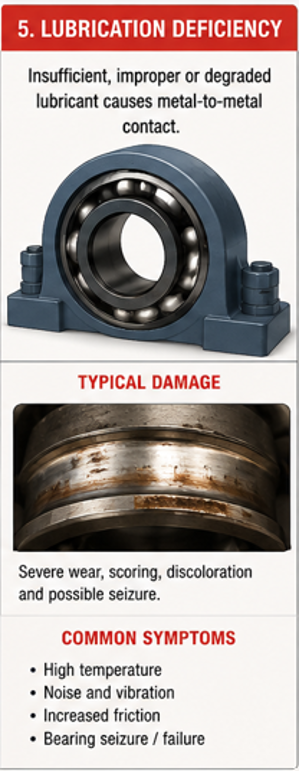
One of the most common issues.
Results in:
- Increased friction
- Surface wear
- Elevated contact stress
Why Ultrasound is Highly Effective for Slow-Speed Bearings
Ultrasound technology is extremely sensitive to:
- Friction
- Surface stress
- Microscopic defects
Even when vibration levels are low.
As bearing surfaces begin deteriorating:
- Friction increases
- Ultrasonic emissions increase
- High-frequency stress waves are generated
Ultrasound detects these changes much earlier than traditional vibration analysis.

Benefits of Ultrasound for Slow-Speed Bearings
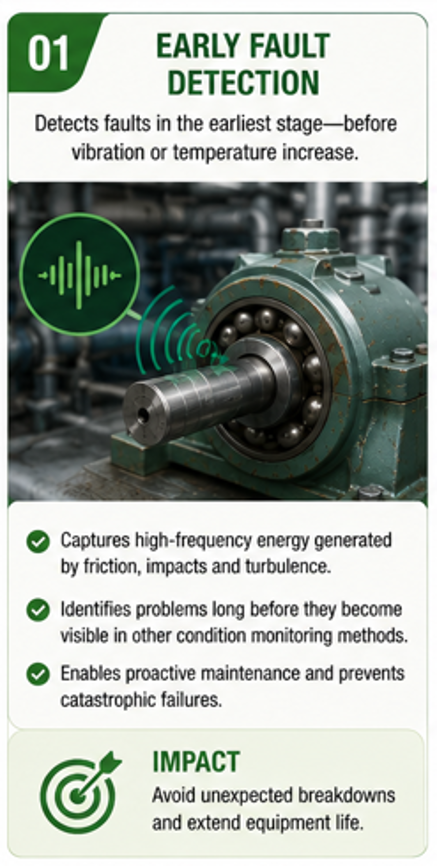
- Identifies defects before they become visible in vibration spectra.
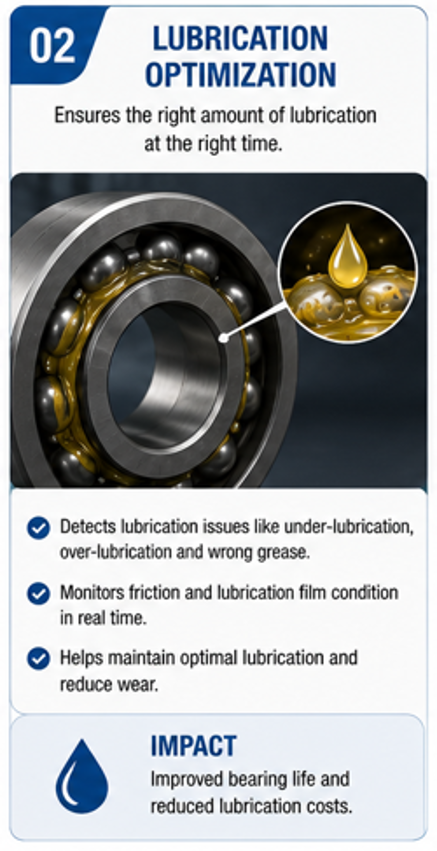
Helps determine:
- Proper lubrication condition
- Grease quantity requirements
- Lubrication intervals

Highly effective even for bearings operating:
- Below 50 RPM
- Under intermittent movement
Reduced Catastrophic Failure
- Allows planned maintenance before severe damage occurs.
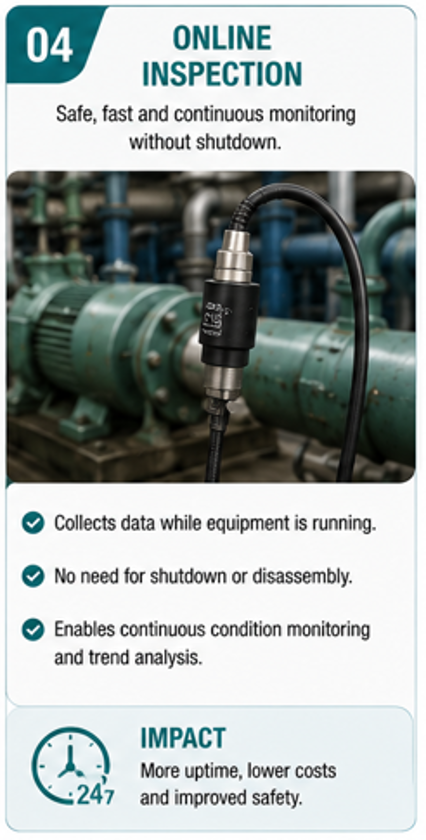
Inspection can be performed:
- During operation
- Without shutdown
Benefits to Industry
|
Benefit
|
Impact
|
|---|---|
|
Early Defect Detection
|
Prevents unexpected failures
|
|
Reduced Downtime
|
Better production continuity
|
|
Improved Reliability
|
Stable equipment performance
|
|
Enhanced Safety
|
Reduced catastrophic failures
|
Why Slow-Speed Bearing Monitoring Matters
Slow-speed bearings are often:
- Highly loaded
- Difficult to access
- Critical to production
Failure of these bearings can result in:
- Major downtime
- Equipment damage
- Production loss
- High repair cost
Routine condition monitoring significantly improves reliability and maintenance planning.
Industries Benefiting from Slow-Speed Bearing Analysis
- Steel Plants
- Cement Industries
- Mining
- Power Generation
- Railways
- Material Handling
- Paper Industries
- Heavy Manufacturing
- Process Industries
Conclusion
Slow Speed Bearing Analysis is a specialized predictive maintenance approach that combines ultrasound, vibration analysis, and thermal diagnostics to identify early-stage defects in low-speed rotating equipment.
By implementing advanced monitoring solutions, industries can improve equipment reliability, extend bearing life, reduce downtime, and achieve more efficient and sustainable operations.
Detecting Slow-Speed Defects Before They Become Major Failures