
STEAM TRAP INSPECTION
Steam systems are critical utilities in industrial plants and play a major role in process heating, power generation, and energy transfer. Inefficient steam systems, leaking valves, and failed steam traps can result in significant energy losses, safety hazards, reduced productivity, and increased operating costs.
Ultrasound technology provides a fast, safe, and highly effective method for inspecting steam systems and valves while equipment remains online and operational.
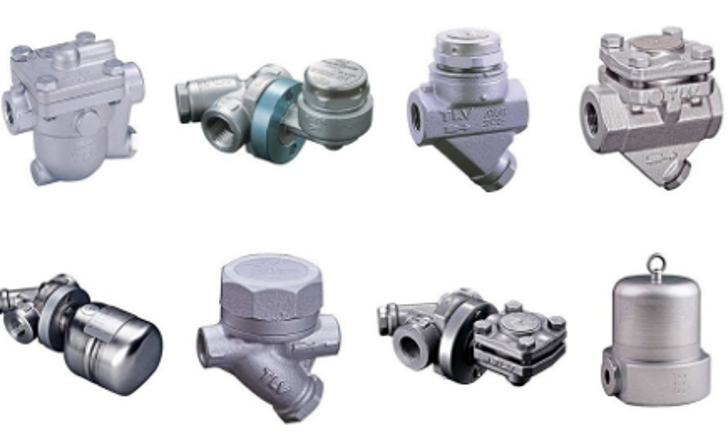
Steam Trap Inspection
Steam traps are essential for removing condensate while preventing live steam loss.
Ultrasound helps identify:
- Failed open steam traps
- Blocked steam traps
- Cycling abnormalities
- Live steam leakage
- Condensate backup
- Steam trap inspection using ultrasonic technology allows for immediate assessment of traps and system operational efficiencies.
- An inspector’s knowledge of ultrasound and the subject test equipment can allow for real time data acquisition and diagnosis.
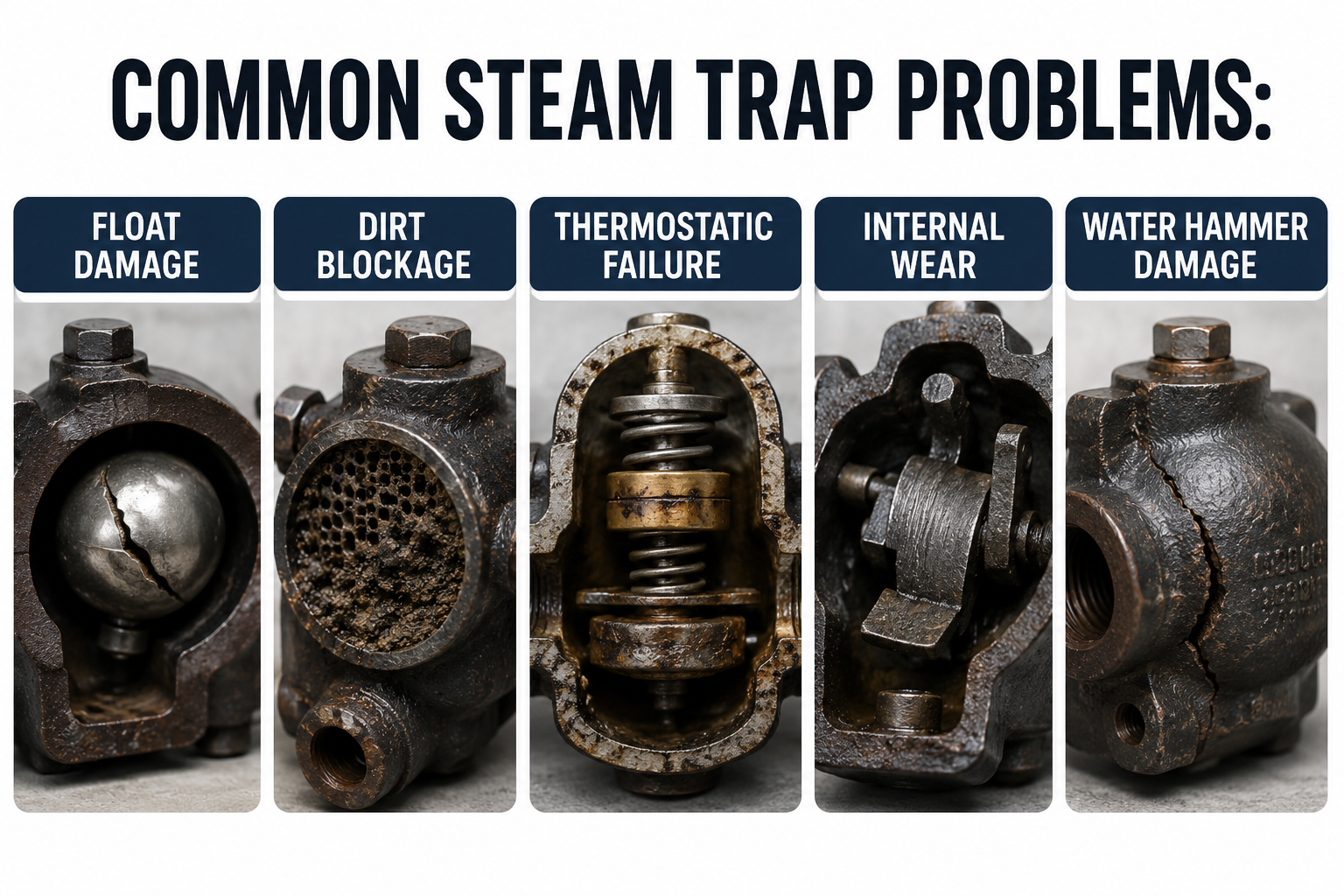
Common Steam Trap Problems:
- Float damage
- Dirt blockage
- Thermostatic failure
- Internal wear
- Water hammer damage
Why Steam Trap Monitoring is Important
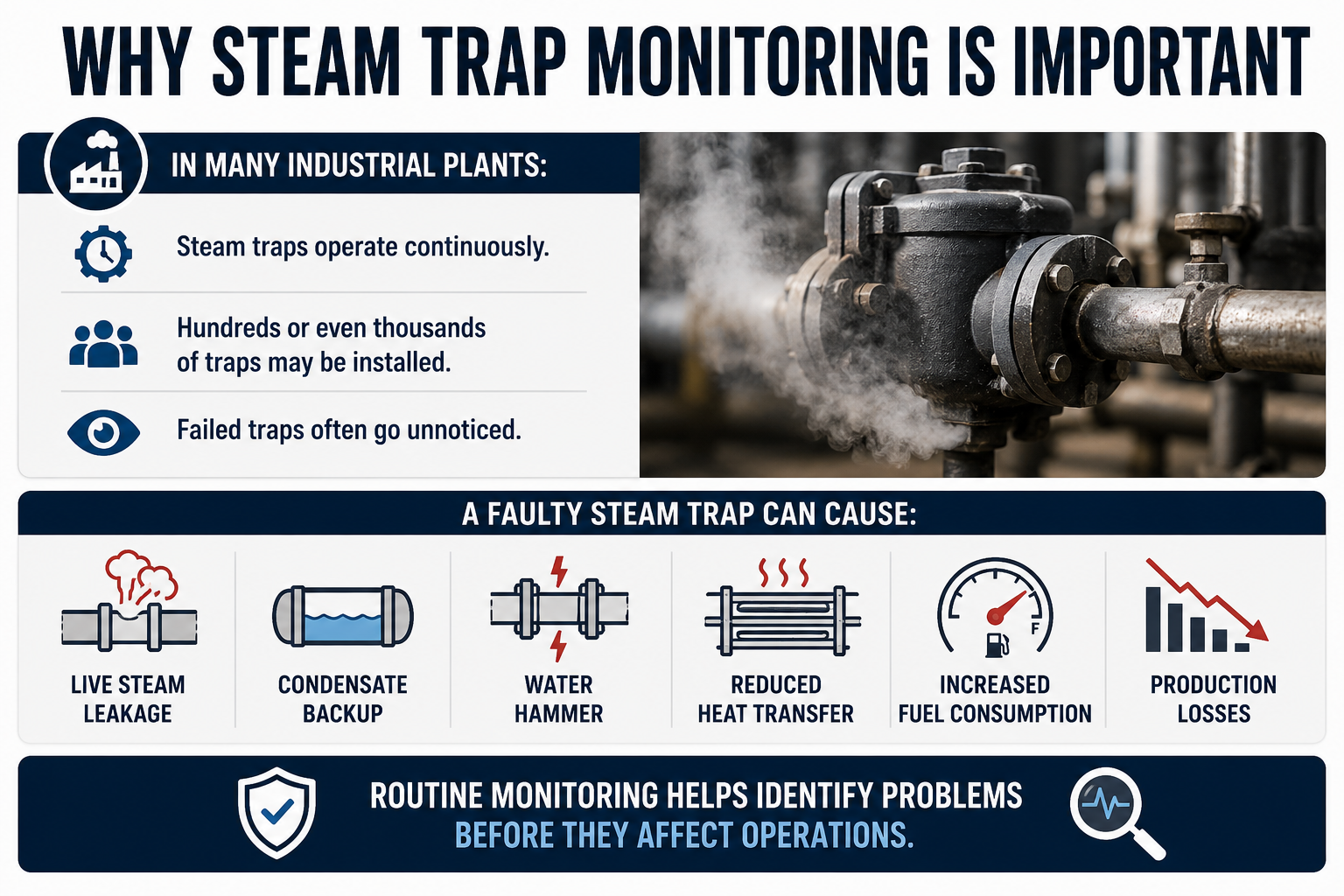
In many industrial plants:
- Steam traps operate continuously.
- Hundreds or even thousands of traps may be installed.
- Failed traps often go unnoticed.
A faulty steam trap can cause:
- Live steam leakage
- Condensate backup
- Water hammer
- Reduced heat transfer
- Increased fuel consumption
- Production losses
Routine monitoring helps identify problems before they affect operations.
How Ultrasound Helps in Steam Trap Monitoring
Ultrasound instruments detect:
- Turbulence
- Flow characteristics
- Internal steam movement
- Valve cycling patterns
When a steam trap operates abnormally, it generates a distinct ultrasonic signature.
Technologies such as:
- Ultraprobe UP100
- Ultraprobe UP3000
- Ultraprobe UP9000
Allow maintenance teams to quickly assess steam trap condition while systems remain online.

Benefits of Steam Trap Monitoring with Ultrasound
- Steam traps play a critical role in steam systems by removing condensate while preventing live steam loss. Failure of steam traps can lead to major energy losses, reduced process efficiency, equipment damage, and unexpected downtime.
- Ultrasound-based steam trap monitoring provides industries with a predictive and condition-based maintenance approach that improves reliability while ensuring maximum system uptime.
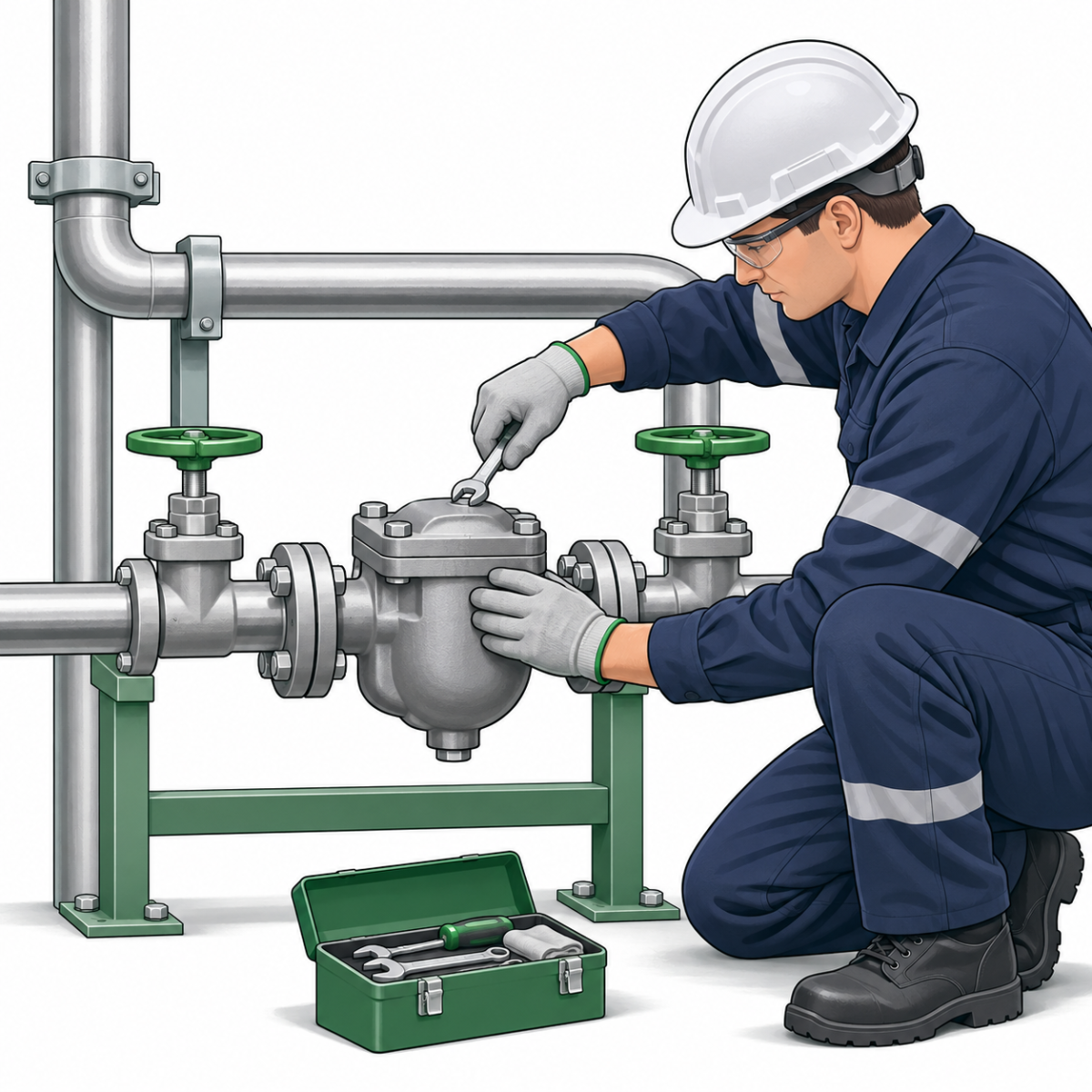
1. Ease of Maintenance
Ultrasound simplifies inspection by allowing technicians to:
- Inspect traps during operation
- Detect faults quickly
- Pinpoint exact problem locations
- Reduce troubleshooting time
- This minimizes maintenance complexity and improves inspection efficiency.

2. Ensures Maximum Plant Uptime
Steam trap monitoring helps avoid:
- Unexpected steam system failures
- Process interruptions
- Production downtime
- Early fault detection allows maintenance teams to schedule repairs during planned shutdowns rather than emergency situations.
3. Early Detection of Steam Trap Failures
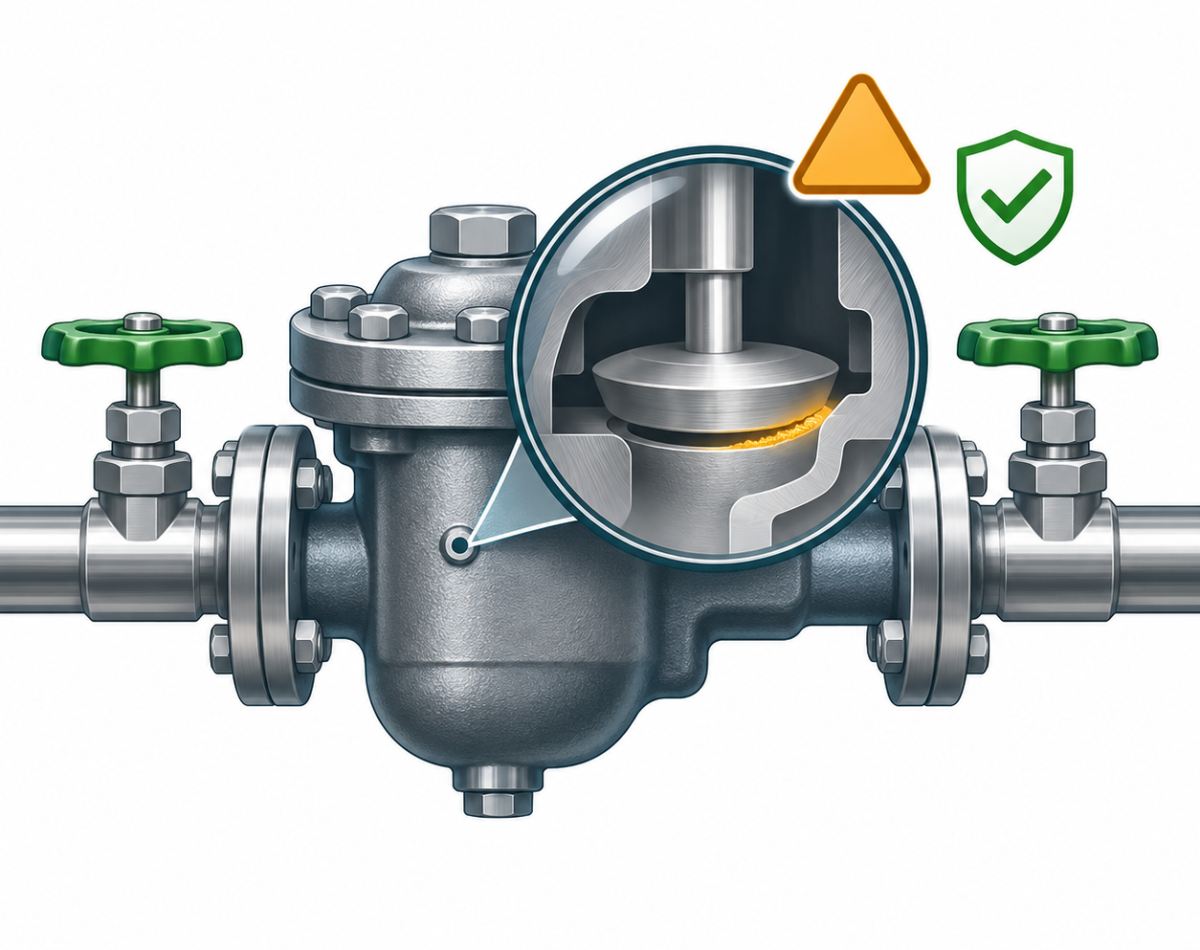
Ultrasound identifies:
- Failed open traps
- Blocked traps
- Steam leakage
- Float damage
- Cycling abnormalities
- Internal wear
- before major failures occur.

4. Online Inspection Without Shutdown
One of the biggest advantages is that inspections can be performed:
- During normal operation
- Without isolating equipment
- Without interrupting production
- This significantly improves operational continuity.
5. Reduced Energy Loss
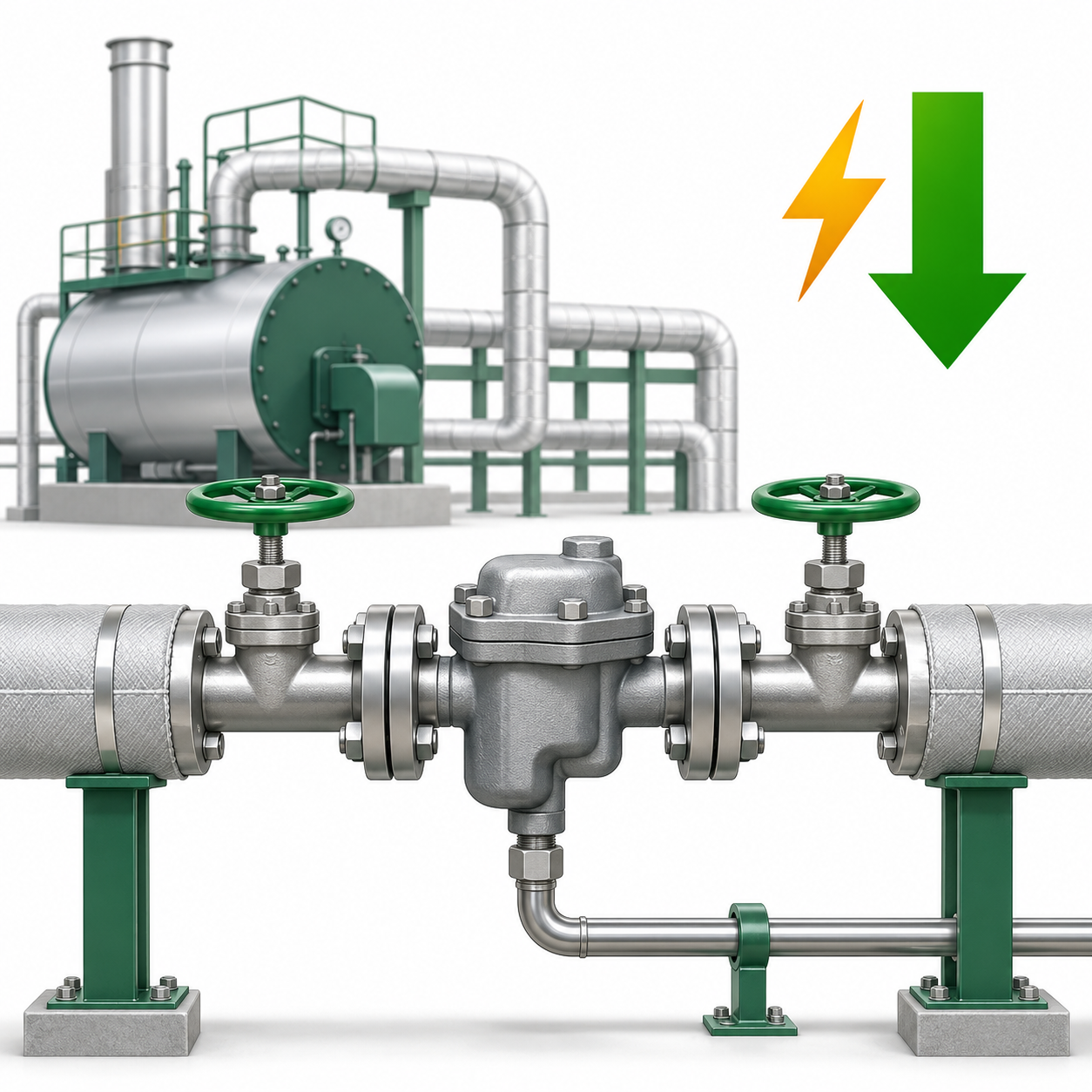
Failed steam traps can waste large quantities of live steam.
Ultrasound monitoring helps:
- Detect steam leakage early
- Reduce boiler load
- Lower fuel consumption
- Improve steam efficiency
- This results in substantial energy savings.

6. Prevention of Water Hammer
Blocked or malfunctioning traps allow condensate accumulation.
This may cause:
- Water hammer
- Pipe stress
- Valve damage
- Equipment failure
- Routine monitoring helps maintain proper condensate drainage and system stability.
7. Improved Equipment Reliability
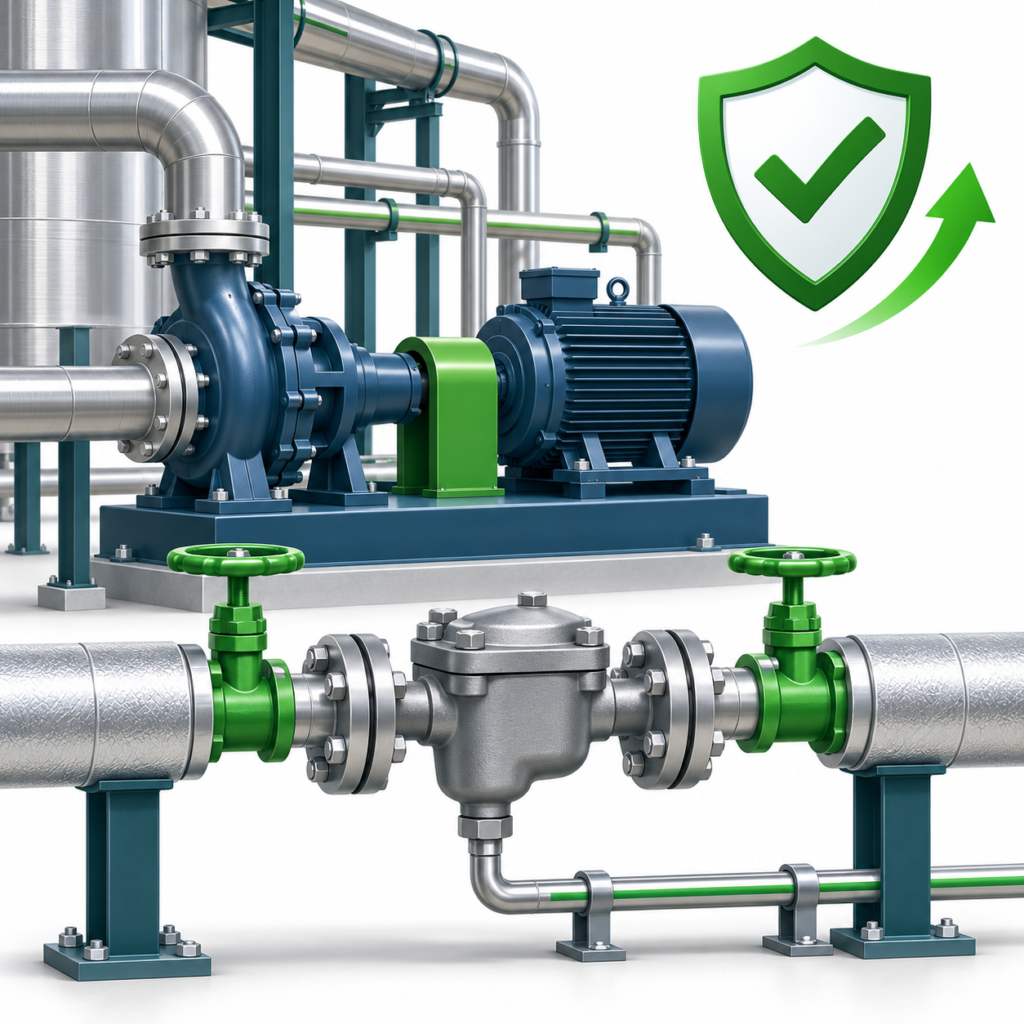
Efficient condensate removal ensures:
- Stable steam quality
- Better heat transfer
- Reduced corrosion
- Lower thermal stress
This extends the life of:
- Steam lines
- Heat exchangers
- Valves
- Process equipment
8. Reduced Maintenance Costs
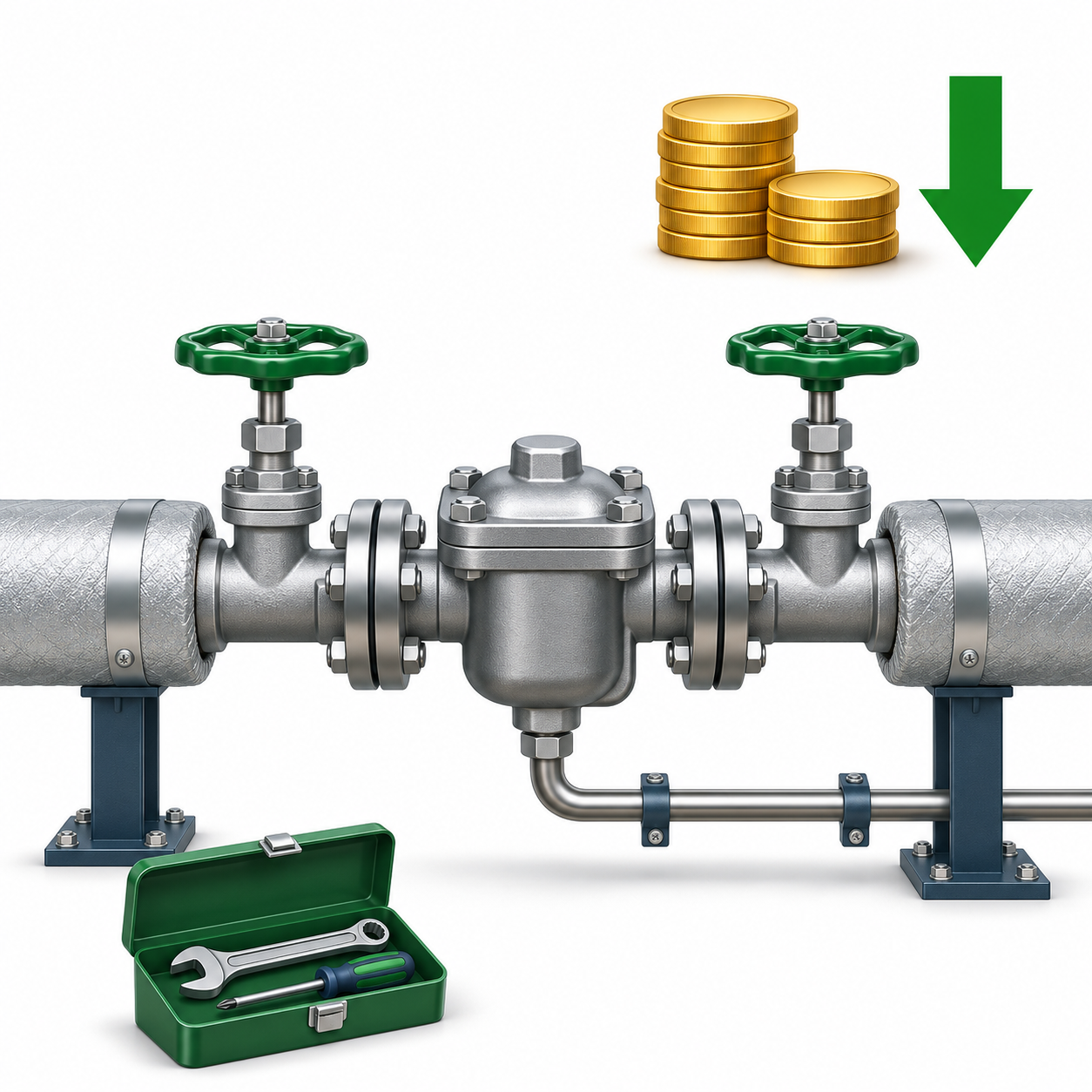
Condition-based monitoring avoids:
- Unnecessary steam trap replacement
- Emergency repairs
- Major system damage
- Maintenance becomes more targeted and efficient.

9. Faster Inspection of Large Plants
Ultrasound enables rapid inspection of:
- Hundreds of steam traps
- Large steam distribution systems
- Remote and elevated locations
- Acoustic imaging systems further improve inspection speed by visually locating abnormal ultrasonic activity.

10. Improved Safety
Steam systems operate at:
- High temperature
- High pressure
Ultrasound allows:
- Non-contact inspection
- Safe distance monitoring
- Reduced exposure to hazardous steam leaks
Temperature Measurement for Steam Trap Inspection
Temperature measurement and thermography are widely used to assess the thermal condition of steam traps and identify operating abnormalities. By measuring the surface temperatures of the steam trap body, inlet, and outlet piping, maintenance personnel can detect temperature patterns that indicate whether the trap is operating under expected conditions.

1. Verifies Steam Supply to the Trap
Measuring the inlet temperature confirms whether steam is reaching the steam trap.
Indications:
- Inlet temperature close to the saturated steam temperature → Steam is available.
- Significantly lower inlet temperature → Possible closed isolation valve, blocked strainer, or no steam supply.
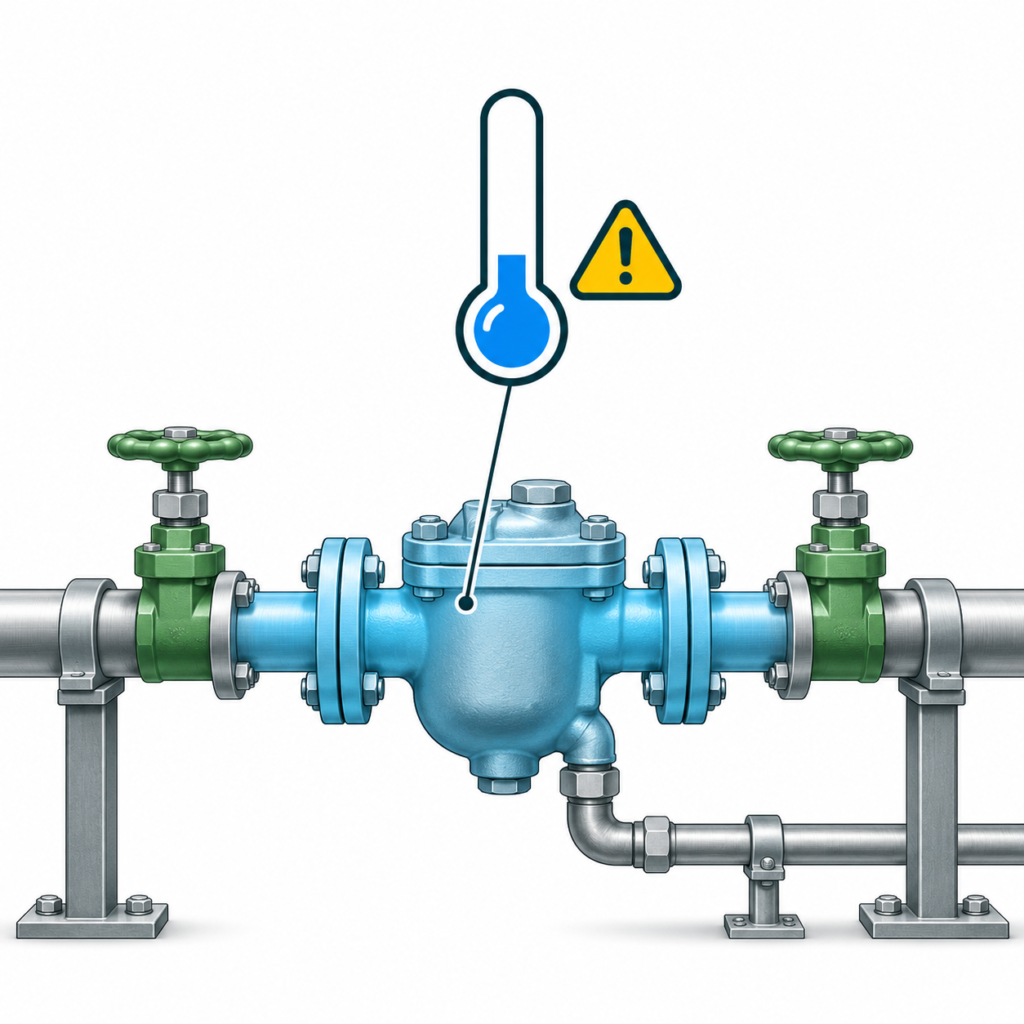
2. Detects Cold or Inactive Steam Traps
A steam trap with an unusually low body temperature compared to adjacent traps may indicate:
- No steam flow
- Blocked trap
- Plugged strainer
- Isolated steam line
- Shutdown equipment
Thermography quickly highlights these abnormal cold spots during plant-wide inspections.
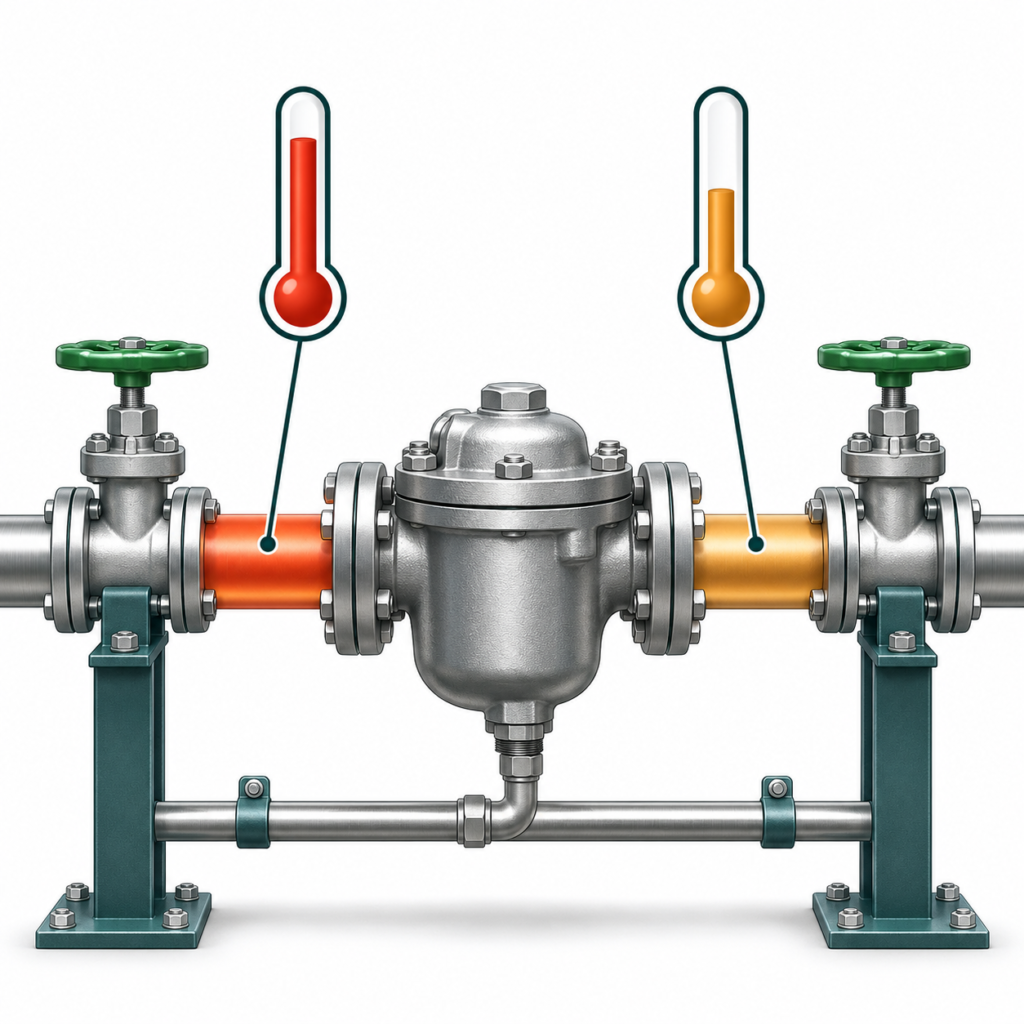
3. Identifies Temperature Differences Across the Steam Trap
Comparing the inlet and outlet temperatures provides valuable information about the trap’s thermal performance.
Typical observations include:
- Higher inlet temperature with a cooler outlet indicates condensate is being discharged and heat is being removed.
- Similar inlet and outlet temperatures may suggest continuous hot condensate or steam flow and require further evaluation.
- Large temperature differences may indicate restricted condensate flow or abnormal operating conditions.
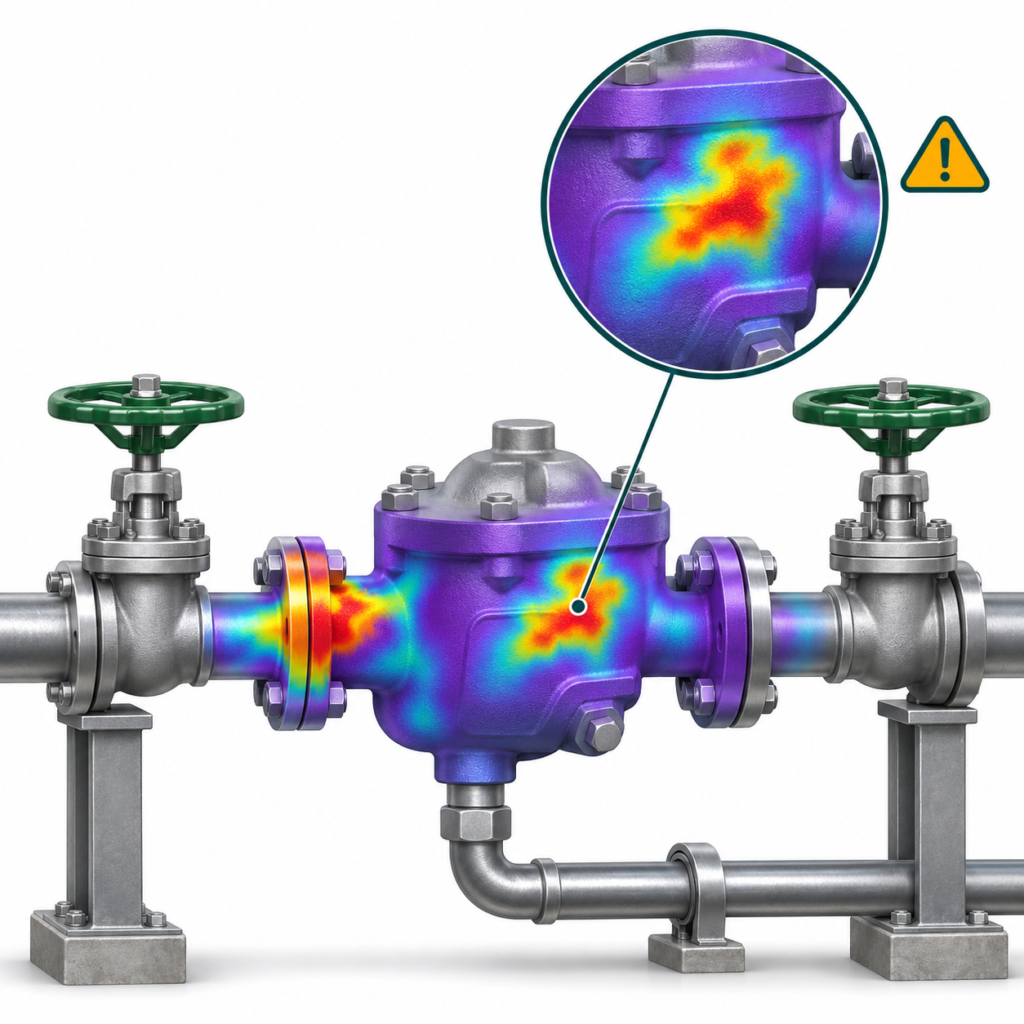
4. Locates Abnormal Heat Patterns
A thermal imager can rapidly scan hundreds of steam traps and identify those exhibiting unusual temperature distributions, such as:
- Excessively hot outlet piping
- Uniformly high temperatures across the trap body
- Cold trap bodies
- Localized hot spots around valves or piping
These anomalies help prioritize maintenance activities.
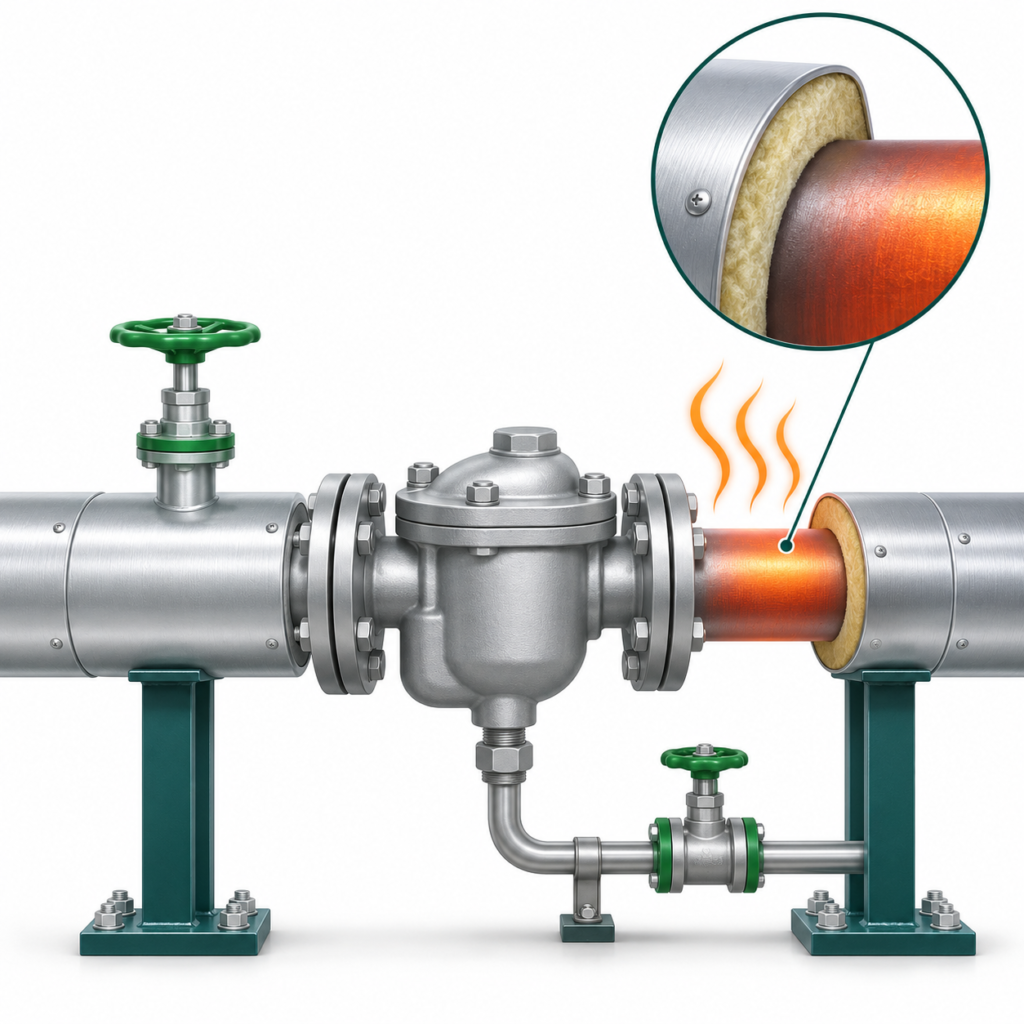
5. Assesses Heat Losses
Thermography helps identify excessive heat loss associated with:
- Poor insulation
- Missing insulation jackets
- Damaged insulation
- Heat leakage from adjacent piping
Reducing these losses improves steam system efficiency and personnel safety.

6. Supports Steam System Surveys
Thermal imaging enables maintenance teams to:
- Inspect a large number of steam traps quickly.
- Compare operating temperatures across similar equipment.
- Identify abnormal thermal signatures.
- Prioritize traps requiring detailed inspection.
- Monitor changes in thermal performance over time.
Benefits of Thermography in Steam Trap Inspection
- Rapid, non-contact inspection
- Safe inspection from a distance
- Quick screening of large steam trap populations
- Detection of heat losses and insulation deficiencies
- Early identification of abnormal operating conditions
- Improves steam system reliability and energy efficiency
- Supports preventive and predictive maintenance programs
Typical Thermal Observations
|
Thermal Observation
|
Possible Indication
|
|---|---|
|
High inlet temperature
|
Steam available at the trap
|
|
Low inlet temperature
|
No steam supply or upstream restriction
|
|
Cold steam trap body
|
Inactive or blocked trap
|
|
Hot outlet piping
|
Continuous discharge of hot condensate or steam
|
|
Abnormal temperature distribution
|
Potential operating abnormality requiring investigation
|
|
Missing insulation detected
|
Increased energy loss
|
Common Steam Trap Problems Identified by Ultrasound
|
Steam Trap Condition
|
Temperature / Thermography Observation
|
Common Problems Identified
|
Ultrasound Observation
|
|---|---|---|---|
|
Normal Operation
|
Inlet temperature near saturated steam temperature. Outlet slightly lower depending on trap type and condensate load. Uniform thermal profile.
|
Steam trap operating under normal conditions.
|
Normal cycling or intermittent condensate discharge with expected ultrasonic signature.
|
|
Steam Supply Not Available
|
Low inlet and outlet temperatures. Cold steam trap body.
|
Closed isolation valve, no steam supply, upstream blockage, process shutdown.
|
Little or no ultrasonic activity.
|
|
Blocked Steam Trap
|
High inlet temperature with significantly lower outlet temperature. Cold downstream piping.
|
Blocked trap, clogged strainer, condensate backup, restricted discharge.
|
Minimal or no condensate discharge sound.
|
|
Continuous Discharge
|
Inlet and outlet temperatures remain consistently high. Outlet pipe remains hot over a long distance.
|
Continuous condensate discharge, excessive condensate load, possible steam loss.
|
Continuous high-flow ultrasonic signal.
|
|
Abnormal Temperature Distribution
|
Uneven heating across trap body or adjacent piping. Localized hot or cold areas.
|
Internal wear, fouling, improper installation, abnormal operating conditions.
|
Irregular ultrasonic pattern requiring further evaluation.
|
|
Heat Loss from Insulation
|
Hot external surface on insulated steam trap or piping.
|
Damaged insulation, missing insulation, increased energy losses.
|
Not applicable to insulation condition.
|
|
Condensate Accumulation
|
High upstream temperature with relatively cool downstream piping and surrounding condensate line.
|
Condensate backup, poor drainage, blocked discharge line.
|
Reduced or intermittent condensate flow sounds.
|
|
Flash Steam Observation
|
Elevated temperature immediately downstream with visible thermal plume (if exposed).
|
Flash steam generation due to pressure reduction; normal in many applications if within design limits.
|
Audible turbulent condensate discharge depending on trap type.
|
|
Thermal Anomaly Compared with Similar Traps
|
Temperature significantly different from identical traps operating under the same conditions.
|
Potential malfunction requiring detailed inspection and maintenance.
|
Ultrasonic pattern compared with identical traps confirms operating condition.
|
Operational Benefits
|
Benefit
|
Result
|
|---|---|
|
Predictive Maintenance
|
Reduced unplanned downtime
|
|
Energy Savings
|
Lower fuel and utility costs
|
|
Improved Reliability
|
Stable steam system operation
|
|
Reduced Failures
|
Longer equipment life
|
|
Increased Uptime
|
Higher plant productivity
|
|
Safer Operations
|
Reduced steam-related hazards
|
CONCLUSION
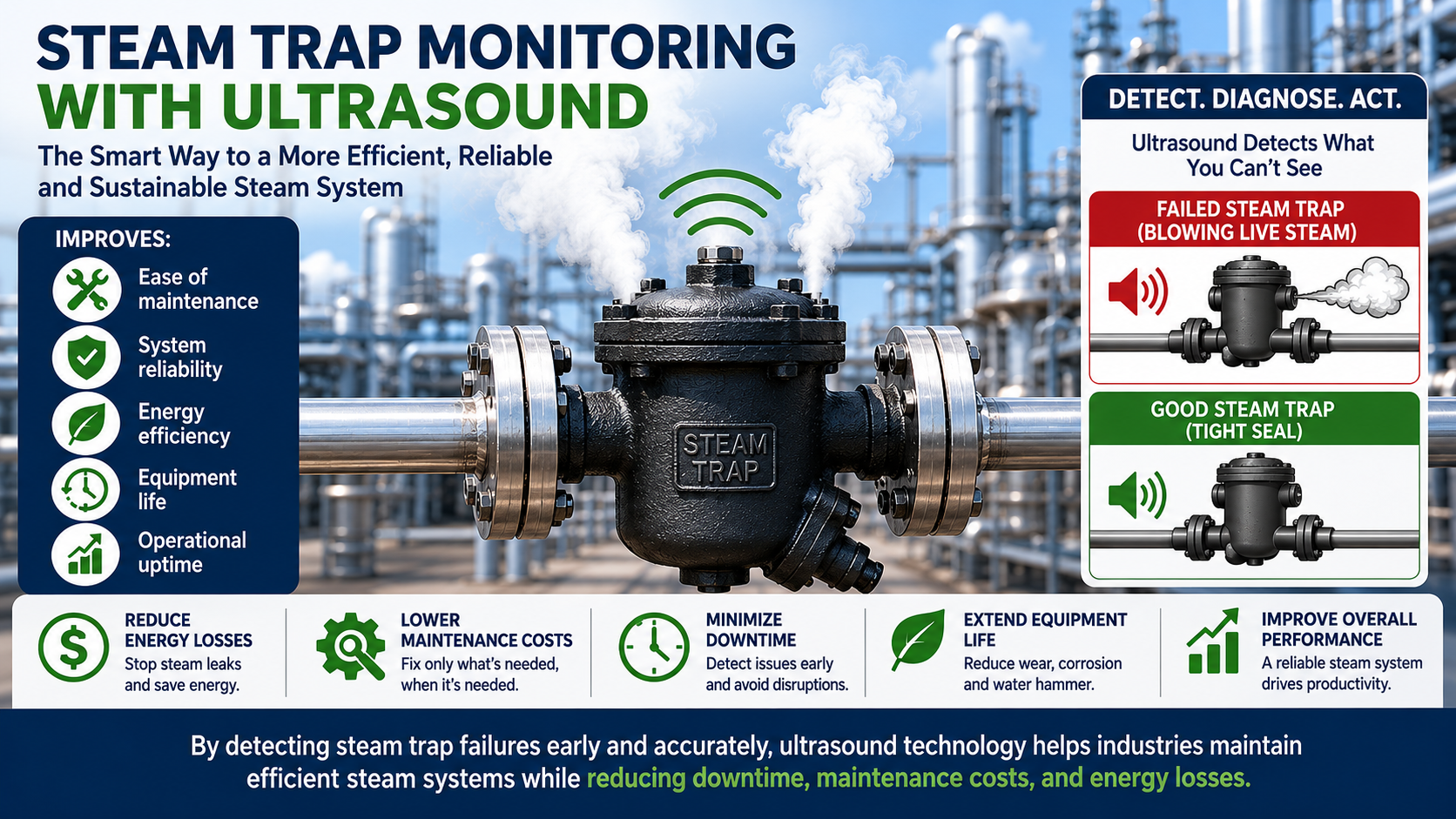
Steam trap monitoring with ultrasound provides industries with a highly effective predictive maintenance solution that improves:
- Ease of maintenance
- System reliability
- Energy efficiency
- Equipment life
- Operational uptime
By detecting steam trap failures early and accurately, ultrasound technology helps industries maintain efficient steam systems while reducing downtime, maintenance costs, and energy losses.
Temperature measurement and thermography provide a fast, non-invasive method for assessing the thermal behavior of steam traps, identifying abnormal temperature patterns, verifying steam availability, detecting heat losses, and prioritizing maintenance activities across the steam distribution system.
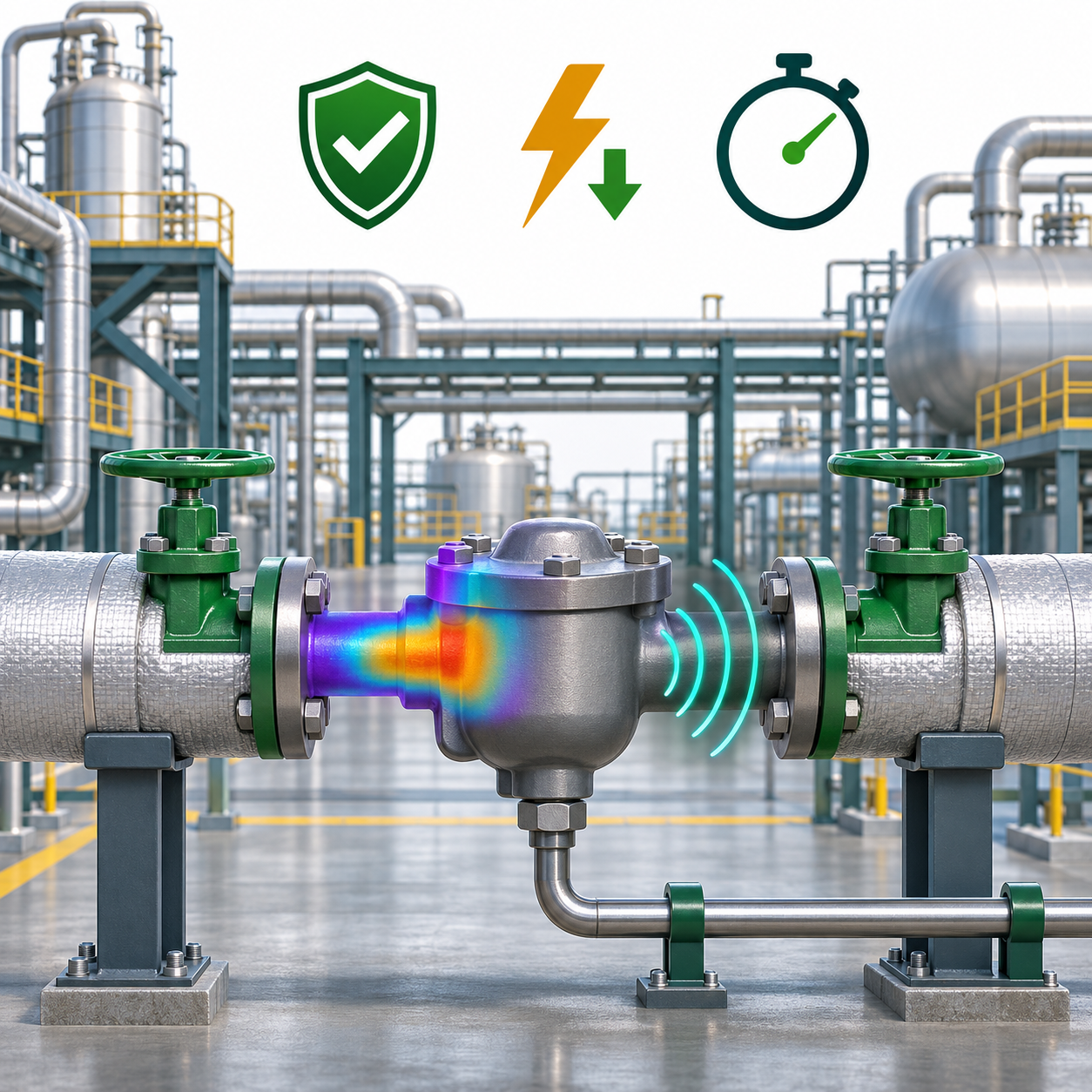
Steam trap monitoring with ultrasound provides industries with a highly effective predictive maintenance solution that improves:
- Ease of maintenance
- System reliability
- Energy efficiency
- Equipment life
- Operational uptime
By detecting steam trap failures early and accurately, ultrasound technology helps industries maintain efficient steam systems while reducing downtime, maintenance costs, and energy losses.